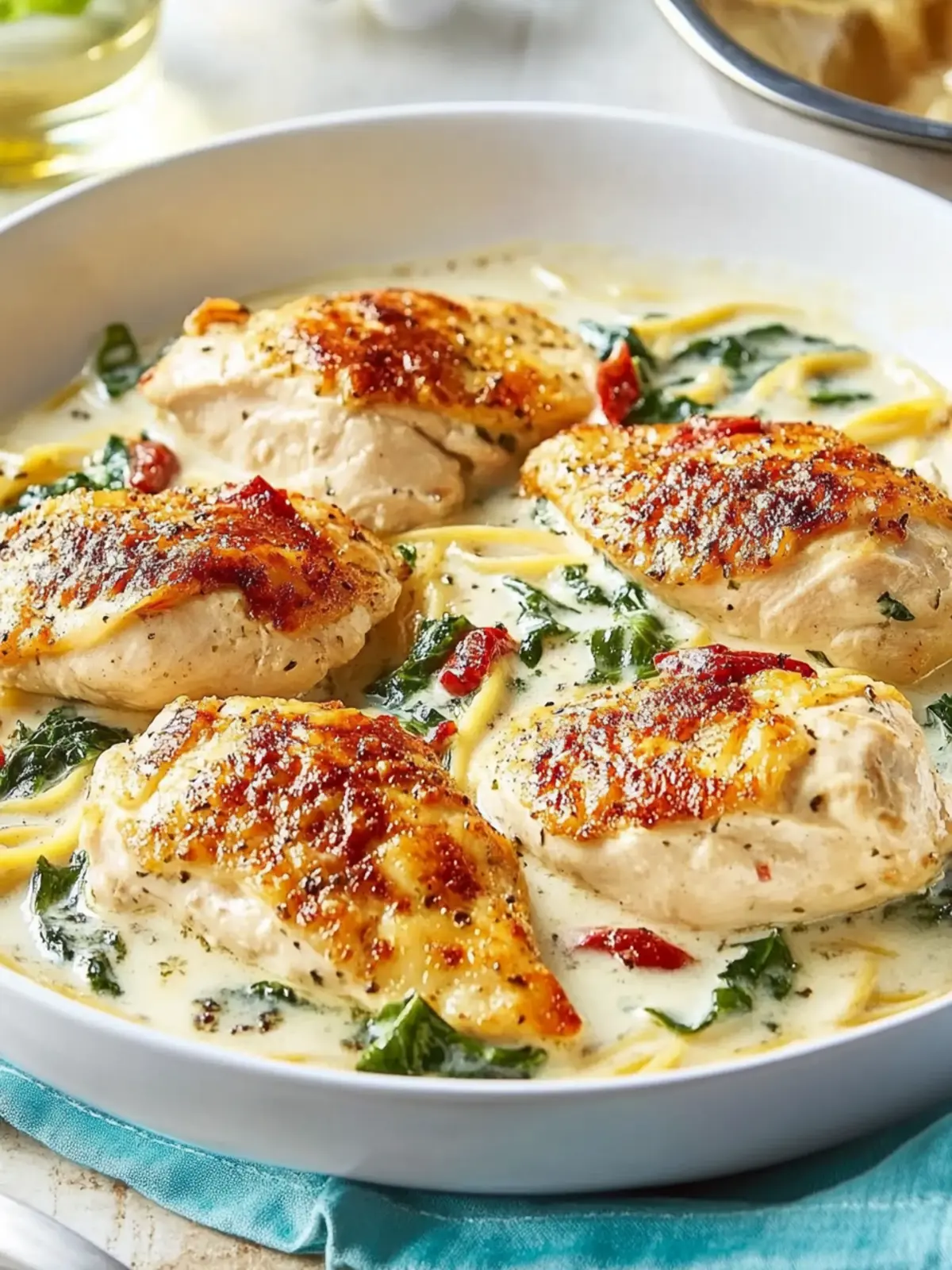
One-Skillet Chicken Florentine: Where Weeknight Ease Meets Date Night Elegance
Imagine a dish that effortlessly transitions from a comforting, quick weeknight meal to an elegant, impressive centerpiece for a special occasion. This culinary chameleon exists, and it's none other than chicken florentine. With its perfectly seared chicken breasts, nestled in a velvety, rich cream sauce infused with vibrant spinach, all cooked in a single skillet, it’s a testament to the fact that gourmet doesn't have to mean complicated. This dish isn't just food; it's an experience – a delicious blend of indulgence and practicality that promises to delight your taste buds and simplify your kitchen routine.
What Makes Chicken Florentine So Irresistible?
The allure of chicken florentine lies in its exquisite balance of flavors and textures. Each bite offers the tender, juicy goodness of boneless chicken breasts, expertly browned to achieve that irresistible golden crust. This chicken is then bathed in a luxurious, often garlicky, white wine and Parmesan cream sauce that is nothing short of divine. The star vegetable, fresh spinach, wilts beautifully into the sauce, lending a subtle earthiness and a pop of color that makes the dish as appealing to the eye as it is to the palate.
For many, this dish evokes a sense of comfort and celebration. Recipe developer Renu Dhar aptly describes it as tasting like "a special occasion dish (because of loads of cream and cheese) or therapy in food form." It's this unique combination of richness and heartwarming appeal that cements chicken florentine as a beloved classic. The term "Florentine" itself historically refers to dishes featuring spinach, a nod to Florence, Italy, where the verdant leaf was a culinary favorite. Modern chicken florentine embraces this tradition, elevating humble spinach into a star ingredient alongside the creamy sauce and tender protein.
Beyond its incredible taste, its appeal also stems from its surprising depth for a meal that comes together with such ease. It’s a dish that manages to feel both hearty and refined, satisfying a craving for something decadent while still offering the goodness of greens.
The One-Skillet Wonder: Efficiency Meets Elegance
One of the most compelling reasons to add chicken florentine to your regular rotation is its ingenious one-skillet preparation. In a world where time is a precious commodity, reducing cleanup without sacrificing flavor is a culinary triumph. This method means less washing, less fuss, and more time to savor your meal or enjoy the company of your loved ones.
The beauty of a single skillet lies in its ability to build layers of flavor. First, the chicken is seared, leaving behind delicious fond – those browned bits at the bottom of the pan – that become the foundation for your rich sauce. Then, aromatic garlic is sautéed, followed by the deglazing liquid (often white wine or chicken broth), cream, and cheese, all mingling in the same pan. Finally, the spinach is added, wilting down into the sauce, infusing it with its distinct character. This seamless progression from searing to saucing ensures that every component is infused with the collective deliciousness of the dish.
This streamlined process makes chicken florentine an ideal candidate for busy weeknights when you crave something extraordinary but need it on the table fast – often in under 40 minutes. Yet, its inherent elegance, vibrant appearance, and restaurant-quality taste make it equally suitable for a romantic date night or a dinner party where you want to impress without being chained to the stove. The one-skillet approach doesn't just save time; it creates a cohesive, deeply flavorful dish that tastes like it took hours of intricate work.
Crafting the Perfect Creamy Sauce: Secrets to Florentine Bliss
The heart and soul of any great chicken florentine recipe is its sauce. It's the luscious, velvety embrace that brings all the elements together. While the core ingredients typically include garlic, white wine (or chicken broth), heavy cream, and Parmesan cheese, achieving that perfect restaurant-quality texture and richness involves a few key insights.
Many recipes, including one highlighted by NYT Cooking, reveal a "secret ingredient" that elevates the sauce to new heights: cream cheese. A small dollop of cream cheese, incorporated into the sauce as it simmers, works wonders. It not only enriches the flavor profile with a subtle tang but also significantly aids in thickening the sauce, giving it an incredibly smooth, luxurious body without needing a traditional roux. This ensures your sauce is beautifully unctuous and clings perfectly to every piece of chicken and spinach.
Here are a few tips for mastering your chicken florentine sauce:
- Don't Skimp on Garlic: Freshly minced garlic provides an indispensable aromatic foundation.
- Deglaze Thoroughly: After searing your chicken, use white wine (a dry varietal like Sauvignon Blanc or Pinot Grigio works best) or chicken broth to scrape up all those browned bits from the bottom of the pan. This is where a huge amount of flavor resides.
- Gentle Simmer: When adding cream, keep the heat at a gentle simmer. Boiling cream vigorously can sometimes cause it to separate or become grainy.
- Parmesan Power: Use freshly grated Parmesan cheese for the best flavor and melting quality. It adds a salty, umami depth that is crucial.
- Wilt Spinach Last: Add your spinach at the very end. It wilts quickly, and adding it too early can result in overly soggy or discolored greens.
While classic chicken florentine champions spinach, the sauce is also wonderfully versatile. Consider adding sun-dried tomatoes for a burst of concentrated flavor, sautéed mushrooms for an earthy depth, or canned artichoke hearts for a tender, tangy bite. A pinch of freshly grated nutmeg can also subtly enhance the creaminess and traditional Italian feel of the sauce. To truly perfect your sauce, learn The Secret to Creamy Chicken Florentine: Indulgent Sauce & Spinach.
Serving Suggestions & Elevating Your Experience
While chicken florentine is a complete meal in itself, pairing it with the right side dishes can elevate your dining experience from great to truly unforgettable.
- Mashed Potatoes: As recommended by recipe tasters, creamy mashed potatoes are an indulgent and delightful accompaniment. Their smooth texture and ability to soak up every last drop of that incredible sauce make them a perfect match.
- Pasta: Serving chicken florentine over a bed of al dente pasta, such as fettuccine, linguine, or even a short pasta like penne, is another classic choice. The noodles become coated in the rich sauce, creating a deeply satisfying dish.
- Crusty Bread: This is a non-negotiable! A warm, crusty baguette or ciabatta is essential for sopping up every single bit of the glorious sauce. Don't let a drop go to waste!
- Roasted or Garlic Potatoes: For a slightly lighter but equally delicious alternative to mashed, roasted baby potatoes or garlic herb roasted potatoes offer a wonderful textural contrast.
- Simple Green Salad: To balance the richness, a fresh, crisp green salad with a light vinaigrette can provide a refreshing counterpoint.
For a date night, presentation matters. Serve the chicken florentine on warm plates, perhaps garnished with a sprinkle of fresh chopped parsley or a final flourish of grated Parmesan. Light a few candles, put on some soft music, and uncork a bottle of crisp white wine (a Pinot Grigio or unoaked Chardonnay would be excellent) to complement the creamy flavors. The simplicity of its preparation frees you up to enjoy the ambiance and your company, rather than being stuck in the kitchen.
Beyond the Recipe: A Glimpse into Florentine's Rich History
The term "Florentine" isn't just a fancy culinary descriptor; it's steeped in history, primarily linked to Florence, Italy, and a legendary figure: Catherine de' Medici. It's widely believed that when Catherine de' Medici, an Italian noblewoman, married King Henry II of France in 1533, she brought with her a retinue of Florentine chefs and a strong preference for foods reminiscent of her homeland, including spinach. Her influence is said to have popularized spinach in French cuisine, cementing its place in dishes that would later bear the "Florentine" name. So, every time you enjoy chicken florentine, you're partaking in a culinary legacy that spans centuries and continents. To delve deeper into this fascinating culinary journey, explore Chicken Florentine Origins: From Catherine de Medici to Your Dinner.
From its noble origins to its modern-day one-skillet convenience, chicken florentine remains a testament to timeless deliciousness. It's a dish that truly delivers on its promise of weeknight ease and date night elegance, offering a creamy, satisfying, and utterly delightful experience every time. So, gather your ingredients, fire up that skillet, and prepare to fall in love with this versatile and incredibly flavorful classic.
